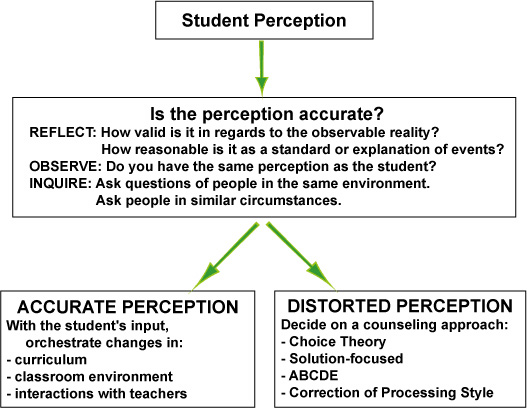
The implementation of this module assumes first and foremost that the student you have selected to work with is a voluntary participant who wishes to try to reverse his underachievement. When faced with any problem, academic or otherwise, a person has only three options: avoid it, learn to deal with it, or change it. If a student expresses the desire to work with you, then she is not avoiding the problem. By using the strategies in this module you can help a student learn how to better deal with the problematic situation (underachievement) and how to make changes to reduce the effects of or eliminate the problem altogether. Cognitive interventions teach good, appropriate, and/or healthy thinking skills.
Next Section: Effective Teacher-Student Interaction for Achievement
Previous Section: Getting Started: Working With Adolescents